
Hip Replacement
Home > Treatment > Hip Replacement Surgery Treatment
Hip Replacement Surgery in Chennai, India
Dr. Balamurugan J is a senior orthopedic surgeon and Clinical Lead – Orthopedics at Kauvery Hospital, Radial Road, and Founder of Dr Bala’s Ortho Clinic. With over 15 years of experience, he specializes in joint replacement, arthroscopy, and complex trauma care. Trained in India and further specialized in the United Kingdom, he brings international standards of precision and patient-focused care to his practice.
He has performed 2,000+ orthopedic surgeries, including 500+ hip and knee replacements and 500+ arthroscopic procedures for sports injuries and knee conditions. Dr Bala completed advanced fellowships in Hip & Knee Arthroplasty and Arthroscopy in the UK and worked within the NHS for three years, gaining experience in high-volume joint replacement systems.
A Gold Medalist in Orthopedics with several indexed publications, he is committed to evidence-based, ethical, and outcome-focused care, helping patients restore mobility, independence, and quality of life.
Hip pain can affect every part of daily life—walking, climbing stairs, getting up from a chair, sleeping comfortably, and enjoying routine activities. When medications, physiotherapy, and lifestyle changes no longer provide enough relief, hip replacement surgery can offer long-lasting pain relief and improved mobility.
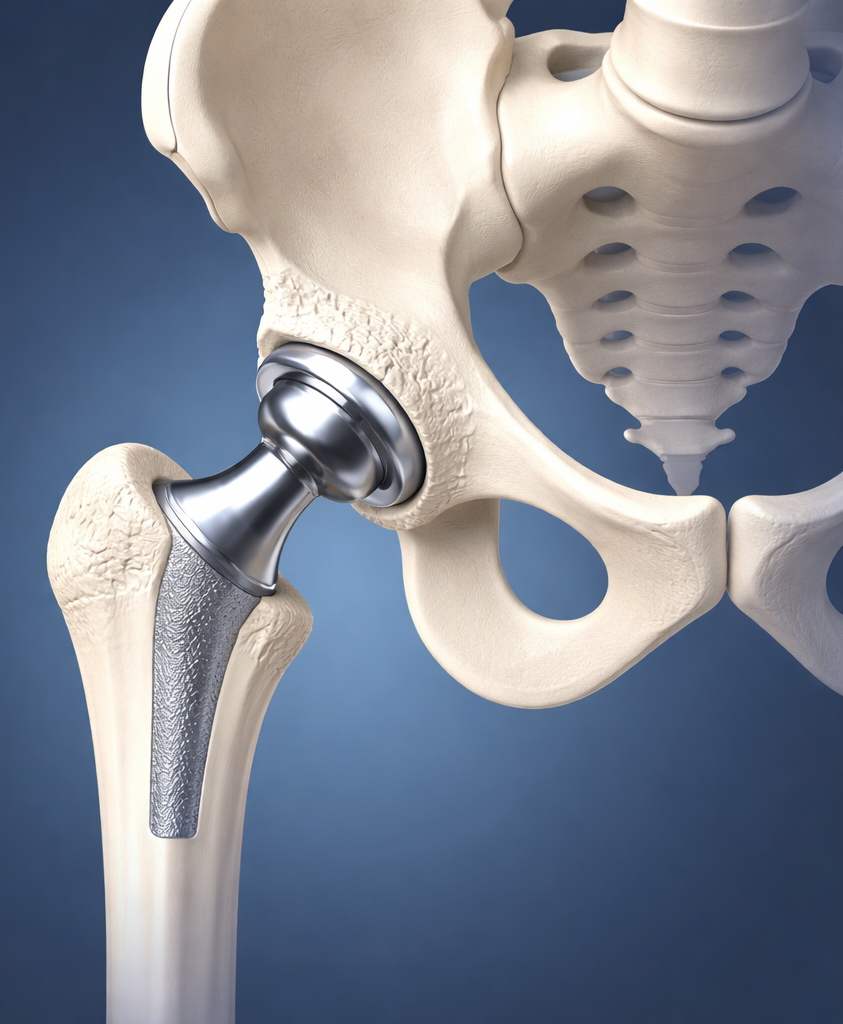
Hip replacement, also called Total Hip Replacement (THR) or Total Hip Arthroplasty (THA), is a procedure in which the damaged parts of the hip joint are replaced with artificial implants.
The hip is a ball-and-socket joint made up of:
The ball is the head of the femur

The socket is part of the pelvis

When these surfaces become worn out or damaged, movement becomes painful and stiff. Hip replacement restores smoother joint movement by replacing the damaged surfaces with prosthetic components.
When Should You Consider
Hip Replacement Surgery?
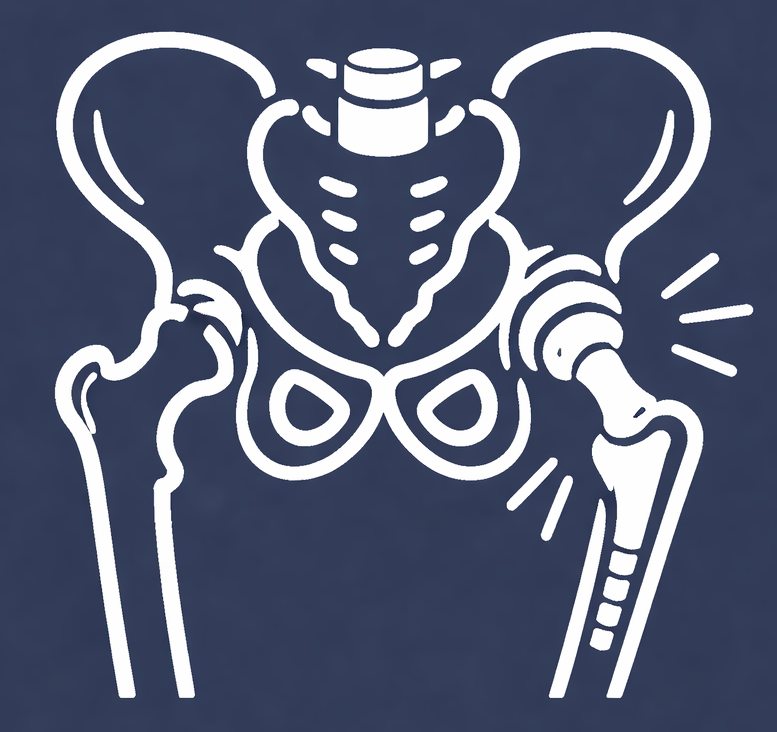
Hip replacement is considered when:
👉 The decision is based not only on the X-ray, but also on how much the condition affects your life.
- Osteoarthritis
- Rheumatoid arthritis
- Avascular necrosis (AVN)
- Hip fractures
- Post-traumatic arthritis
- Inflammatory joint disease
Advanced cartilage damage causing severe pain and stiffness
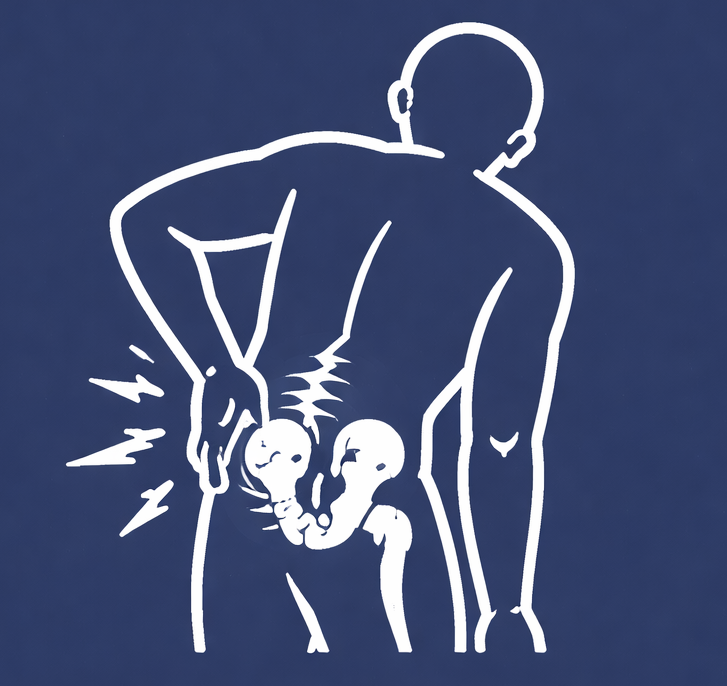
Persistent groin, thigh, or buttock pain
Difficulty walking or limping
Pain while climbing stairs
Stiffness affecting daily activities
Night pain or pain at rest
Poor quality of life despite medicines
Conditions we treat
01
Hip Arthritis
02
Avascular Necrosis
03
Post-traumatic Hip Damage
04
Complex Hip Disorders
Types of Hip Replacement
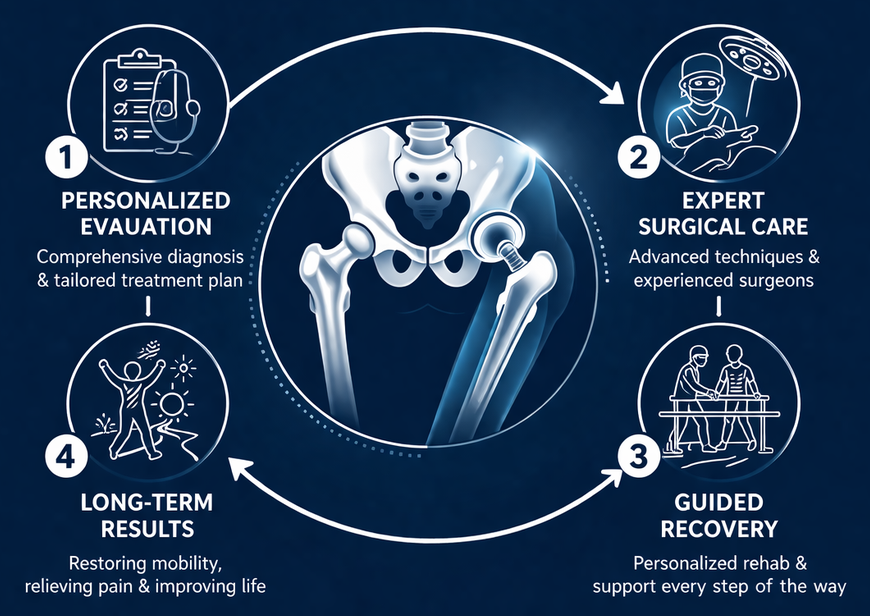
Our Approach to Care
Comprehensive Evaluation
Precision Surgery
Careful attention is paid to:
- Leg length balance
- Implant positioning
- Stability of the hip
- Soft tissue preservation
- Early functional recovery
Enhanced Recovery
Our protocols focus on:
- Early mobilization
- Better pain control
- Reduced hospital stay
- Faster return to independence
Benefits of Hip Replacement
Expect Before Surgery
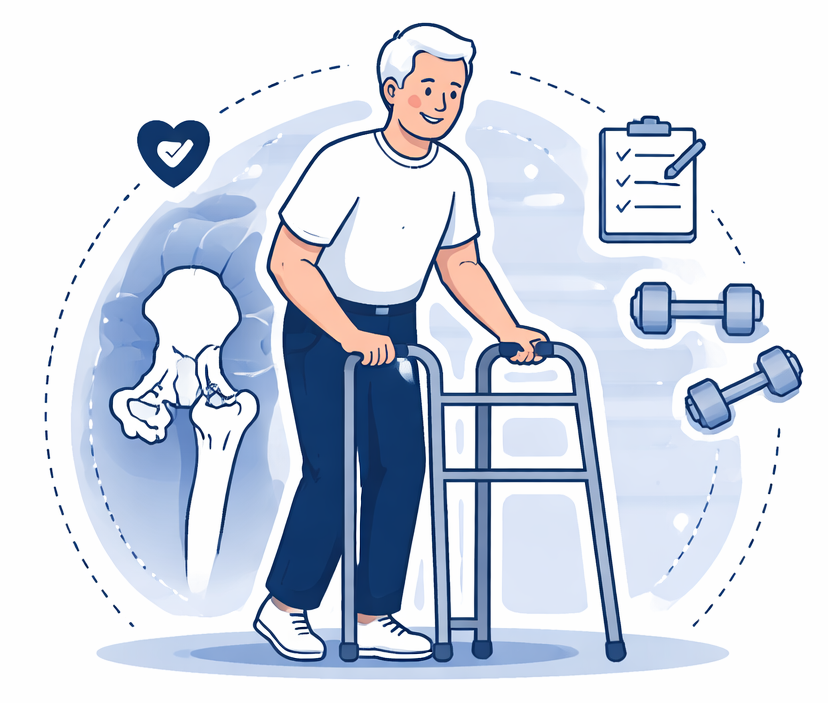
Recovery After Hip Replacement
Immediately After Surgery
- Standing and walking usually begin early under guidance
- Pain is managed with modern multimodal protocols
- Physiotherapy starts during hospital stay
First Few Weeks
- Walking improves steadily
- Daily activities become easier
- Swelling and discomfort gradually reduce
Long-Term Recovery
- Strength, confidence, and endurance continue to improve
- Most patients return to routine activities with much less pain
- Recovery timelines vary depending on age, muscle strength, general health, and the complexity of surgery.
Frequently Asked Questions
1. Is hip replacement a major surgery?
Yes, it is a major procedure, but it is also a well-established and highly successful operation with predictable outcomes in properly selected patients.
2. How long does a hip replacement last?
Modern hip replacements can last many years, depending on implant type, patient activity, bone quality, and overall health.
3. When can I walk after surgery?
Most patients are encouraged to stand and walk early after surgery with supervision.
4. Will I be pain-free after surgery?
The goal is major pain relief and improved function. Most patients experience significant improvement in quality of life.
5. How long will I stay in the hospital?
Hospital stay depends on the patient’s condition, medical fitness, pain control, and walking progress.
6. Can both hips be replaced?
Yes, in selected cases, surgery can be planned depending on symptoms, medical condition, and overall treatment strategy.
7. When can I return to normal activities?
This varies from person to person, but most patients steadily return to routine activities over the weeks following surgery.
Consult Dr. Balamurugan for expert assessment and personalized hip replacement care.