
Knee Replacement
Home > Treatment >
Expert Knee Replacement Surgery in Chennai | 15+ Years Experience
Dr. Balamurugan, a leading orthopaedic surgeon in Chennai, brings over 15 years of experience in advanced knee replacement and joint preservation procedures. With Dr. Balamurugan J, patients receive world-class care backed by precision techniques, ethical practice, and personalized attention.
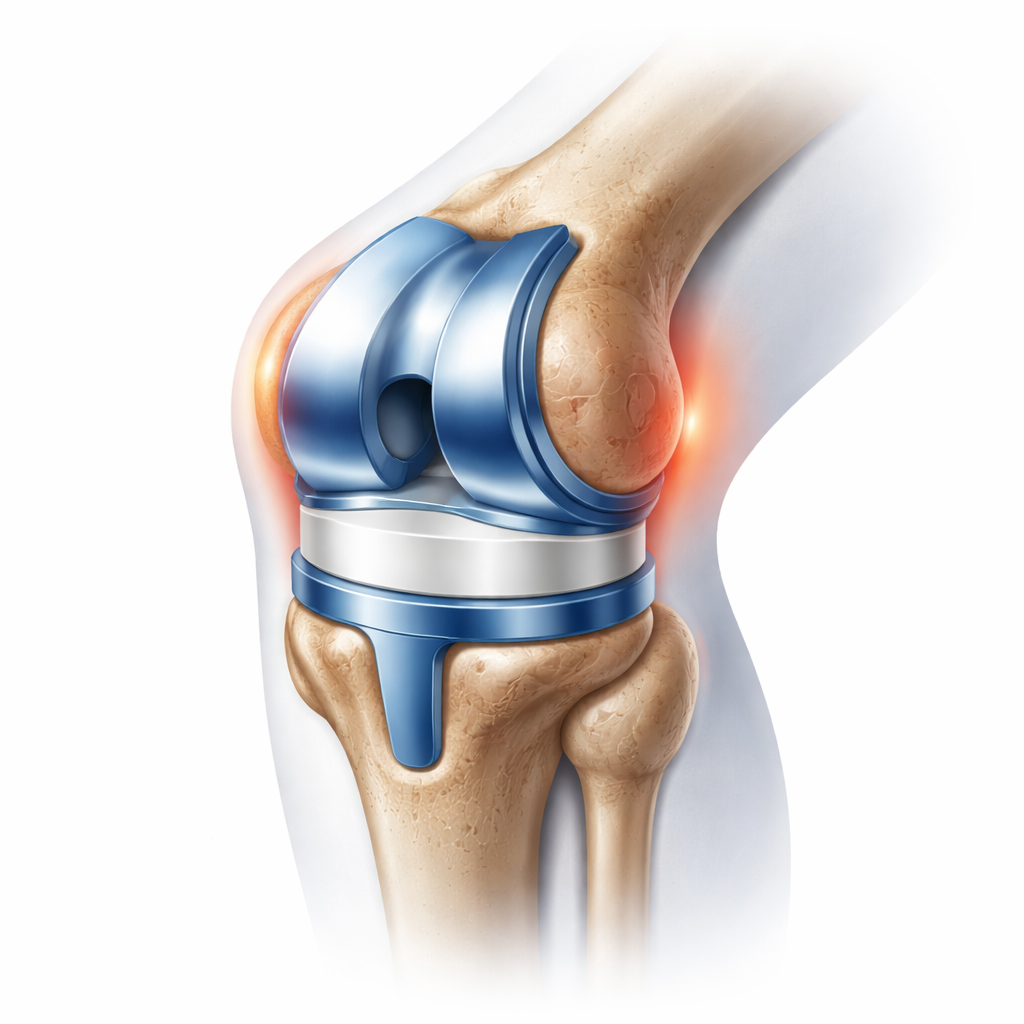
Knee Replacement Surgery

Femur (thigh bone)
Tibia (leg bone)

Patella (kneecap)

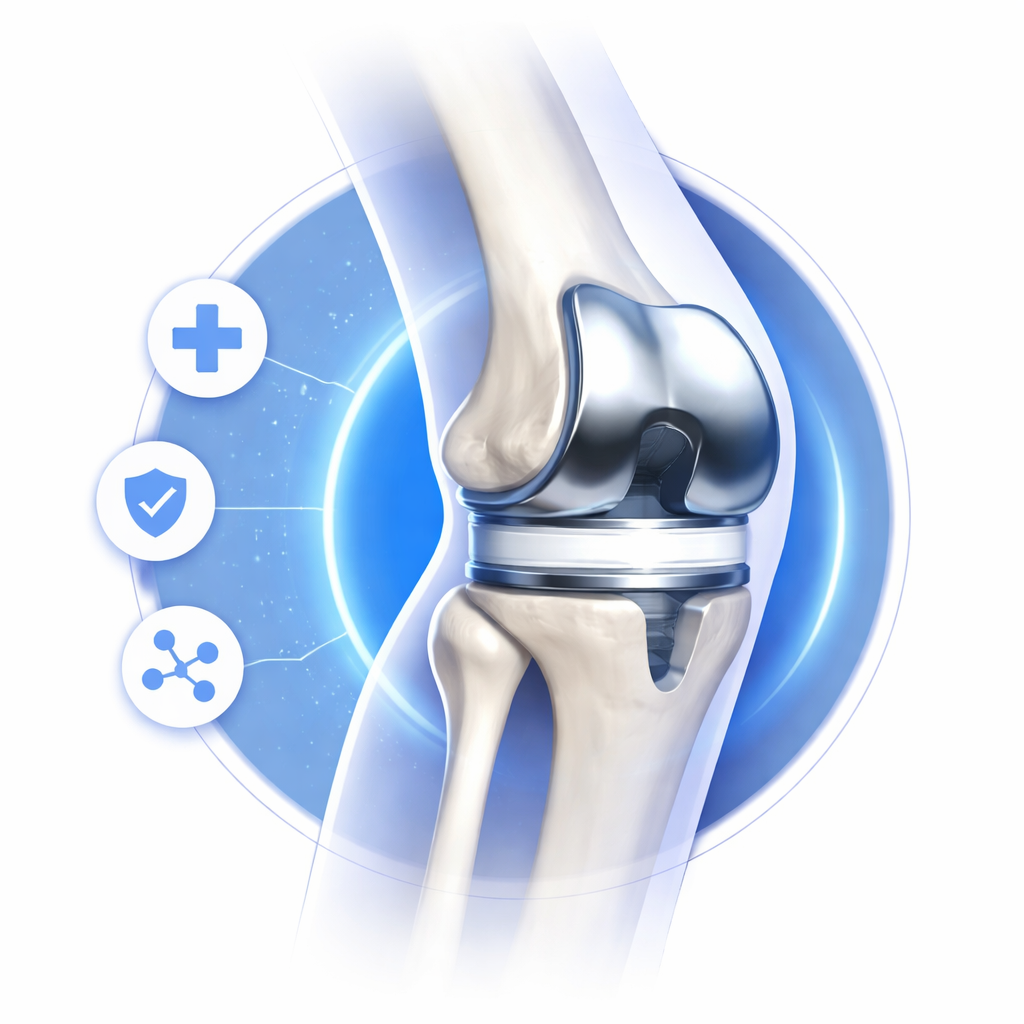
When Should You Consider
Knee Replacement Surgery?
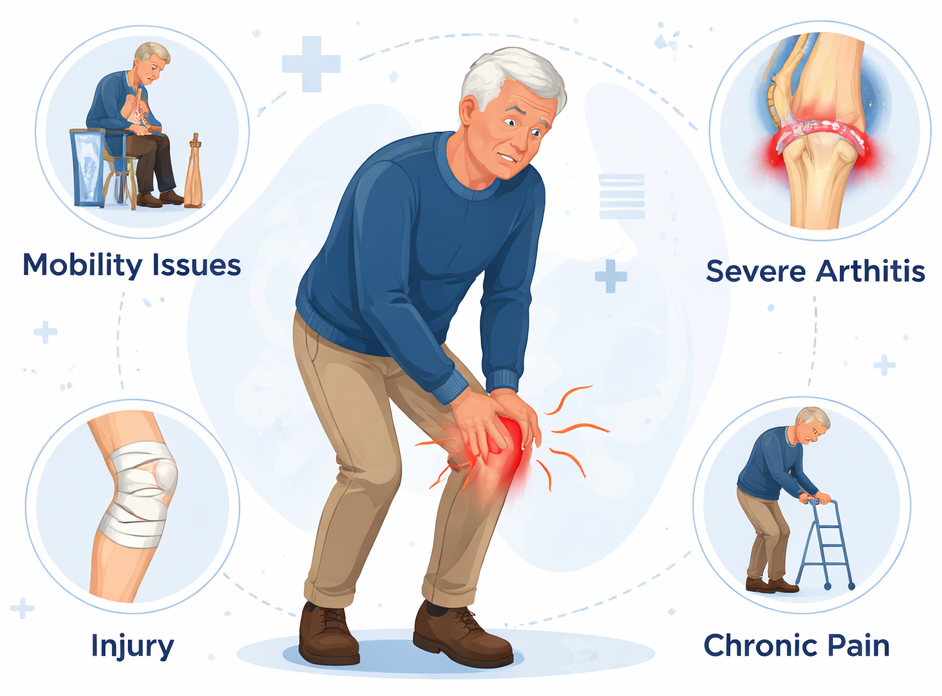
Who Needs Knee Replacement?
- Osteoarthritis
- Rheumatoid arthritis
- Post-traumatic arthritis
- Severe cartilage damage
- Advanced deformities
Persistent knee pain despite treatment
Difficulty walking or climbing stairs
Knee stiffness and reduced movement
Swelling and deformity
Night pain or rest pain
Reduced quality of life
Types of Knee Replacement
We Use Advanced Knee Replacement Techniques
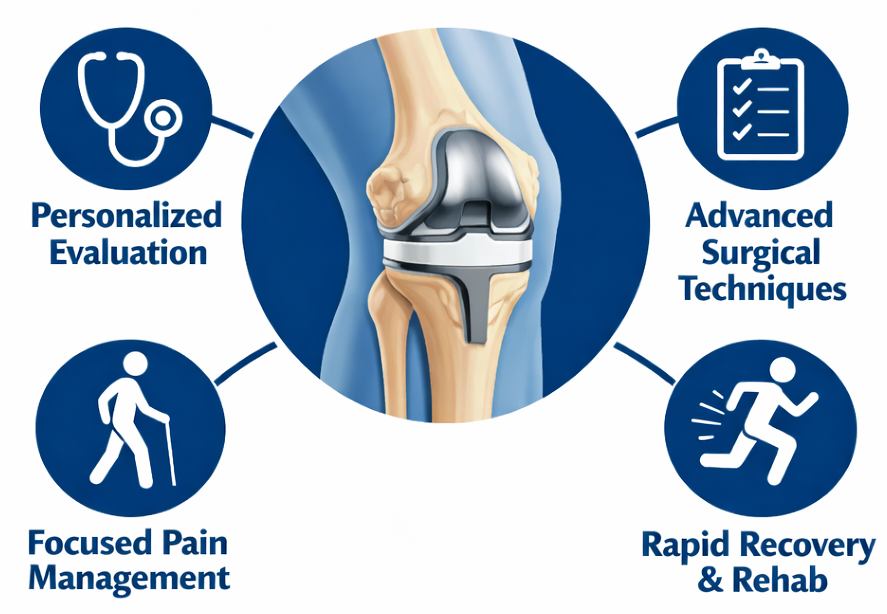
Our Approach to Care
Comprehensive clinical exam and imaging to understand your knee condition.
Personalized Treatment Plan
Tailored surgical approach based on age, deformity, activity level, and expectations.
Precision Surgery
Focus on:
- Proper alignment
- Ligament balance
- Stability
- Natural knee feel
- Early mobilization
- Better pain control
- Faster discharge
- Structured physiotherapy
Benefits of Knee Replacement
Expect Before Surgery
Recovery After Knee Replacement
Immediately After Surgery
- Standing and walking begins early
- Pain is controlled with modern techniques
- Physiotherapy starts in hospital
First Few Weeks
- Gradual improvement in walking
- Increase in knee bending
- Reduction in pain and swelling
Long-Term Recovery
- Strength and confidence improve
- Return to routine activities
- Continued physiotherapy for best results

Frequently Asked Questions
1. Is knee replacement a major surgery?
Yes, it is a major surgery, but it is safe and highly successful when performed for the right indication.
2. How long does a knee replacement last?
Modern knee replacements can last 15–25 years or more, depending on activity level, weight, and implant type.
3. When can I walk after surgery?
Most patients start walking within 24 hours with support and guidance.
4. Is the surgery very painful?
Pain is well controlled with modern anesthesia and pain management protocols. Most patients tolerate it well.
5. How long is the hospital stay?
Typically 3–5 days, depending on recovery and medical condition.
6. When can I climb stairs?
Usually within a few days to weeks with physiotherapy support.
7. Can both knees be replaced at the same time?
Yes, bilateral knee replacement can be done in selected patients depending on health and surgeon’s assessment.
8. Will I be able to sit cross-legged or squat?
This depends on:
- Implant design
- Surgical technique
- Preoperative stiffness
Some patients may achieve partial ability, but deep squatting is generally not recommended after knee replacement.
9. When can I return to work?
- Desk job: 3–4 weeks
- Moderate activity: 6–8 weeks
- Heavy work: Depends on recovery
10. What activities can I do after surgery?
- Walking
- Climbing stairs
- Driving
- Light exercise
High-impact activities (running, jumping) are usually discouraged.
11. Are there risks?
Like any surgery, risks include:
- Infection
- Blood clots
- Implant loosening
- Stiffness
These are uncommon and steps are taken to minimize them.
12. Do I need physiotherapy after surgery?
Yes. Physiotherapy is essential for:
- Regaining movement
- Strengthening muscles
- Achieving the best outcome
13. When will I feel normal again?
Most patients feel significantly better within 6–12 weeks, with continued improvement over time.
If knee pain is limiting your life, don’t wait
Consult Dr. Balamurugan for expert knee evaluation and advanced replacement solutions