
Partial Knee Replacement
Home > Treatments > Partial Knee Replacement
Partial Knee Replacement
Causes & Treatment
Dr. Balamurugan J is a senior orthopedic surgeon and Clinical Lead – Orthopedics at Kauvery Hospital, Radial Road, and Founder of Dr Bala’s Ortho Clinic. With over 15 years of experience, he specializes in joint replacement, arthroscopy, and complex trauma care. Trained in India and further specialized in the United Kingdom, he brings international standards of precision and patient-focused care to his practice.
A Gold Medalist in Orthopedics with several indexed publications, he is committed to evidence-based, ethical, and outcome-focused care, helping patients restore mobility, independence, and quality of life.
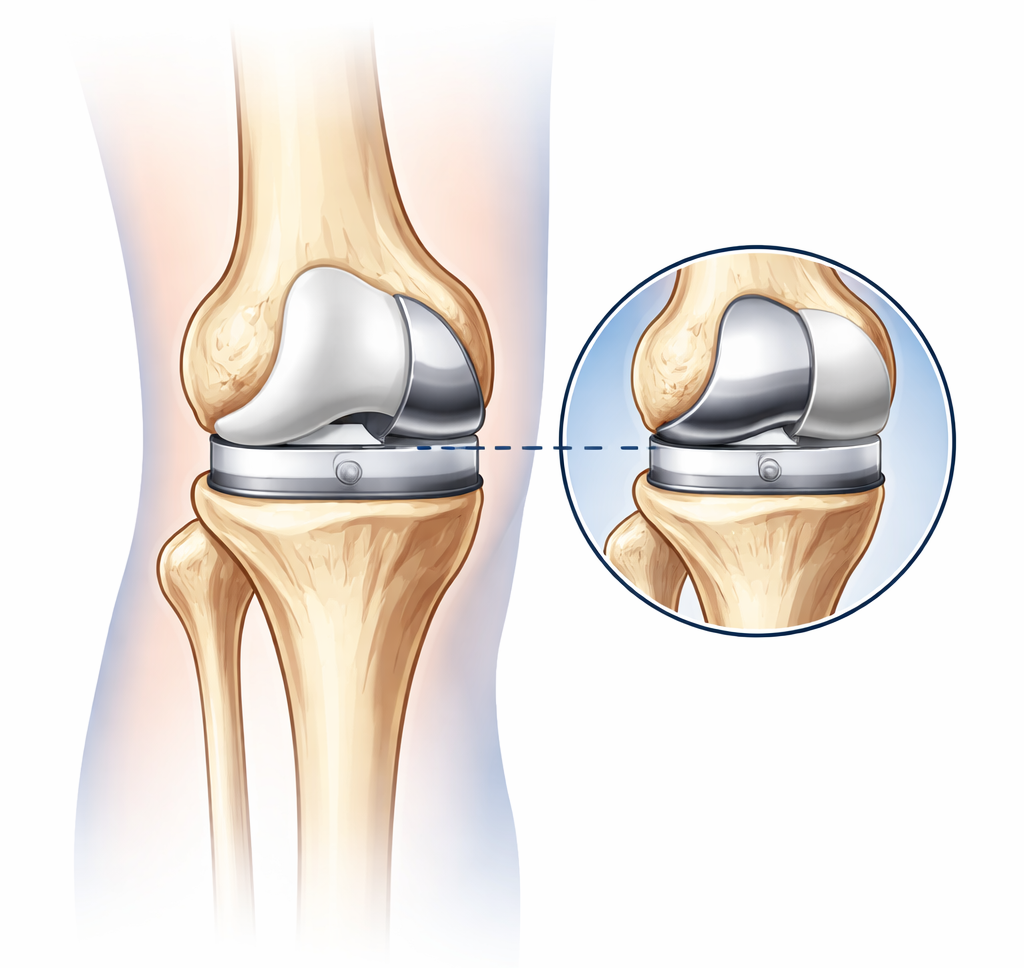
Partial Knee Replacement
What is Partial Knee Replacement?
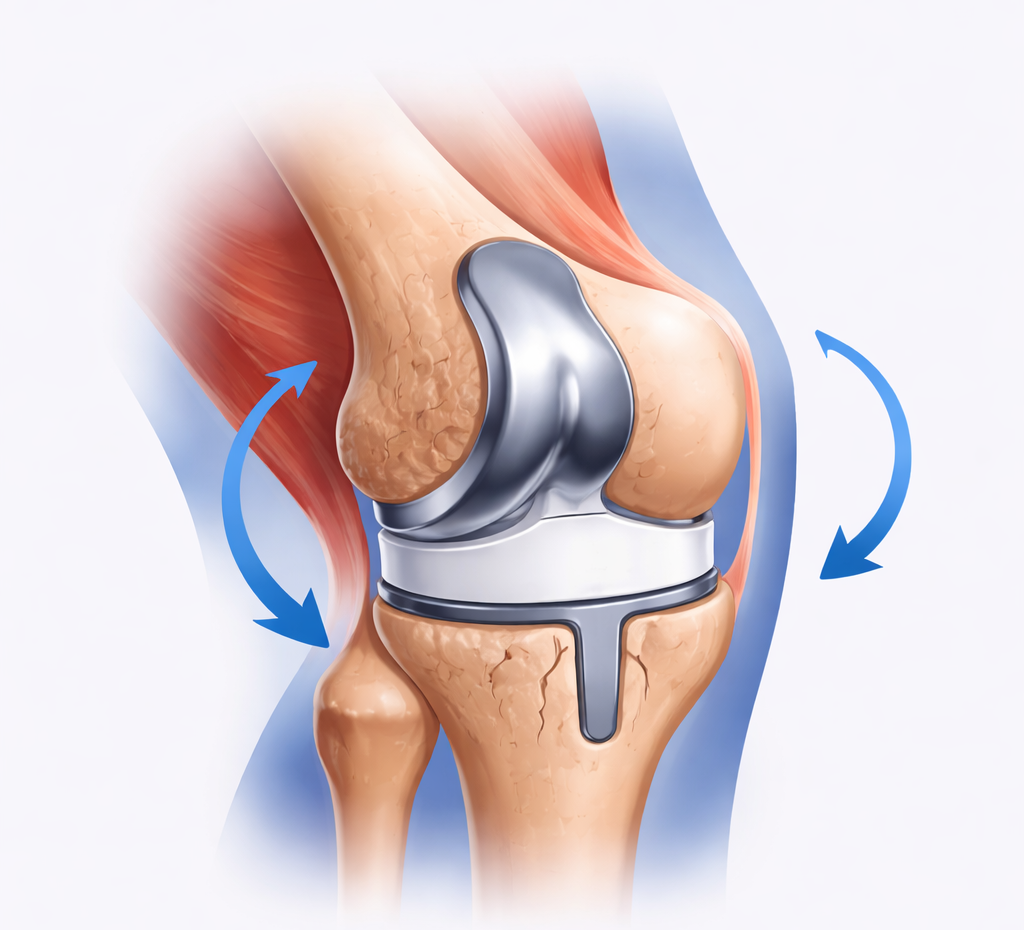
Partial Knee Replacement is a minimally invasive surgical procedure where only the damaged portion of the knee joint is replaced, while preserving healthy bone, cartilage, and ligaments.

Medial (inner knee)
Lateral (outer knee)
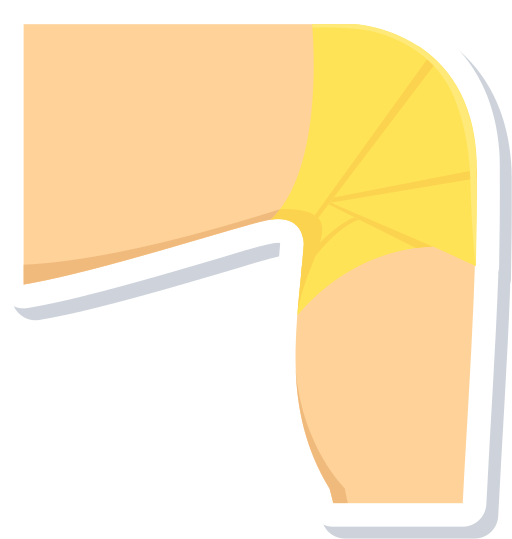
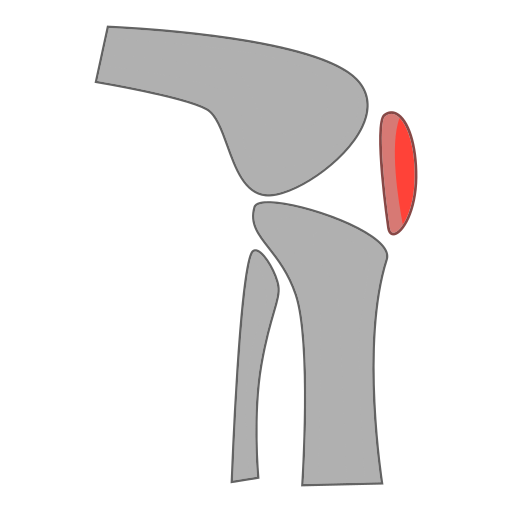
Patellofemoral (front of the knee)
Are You a Candidate?
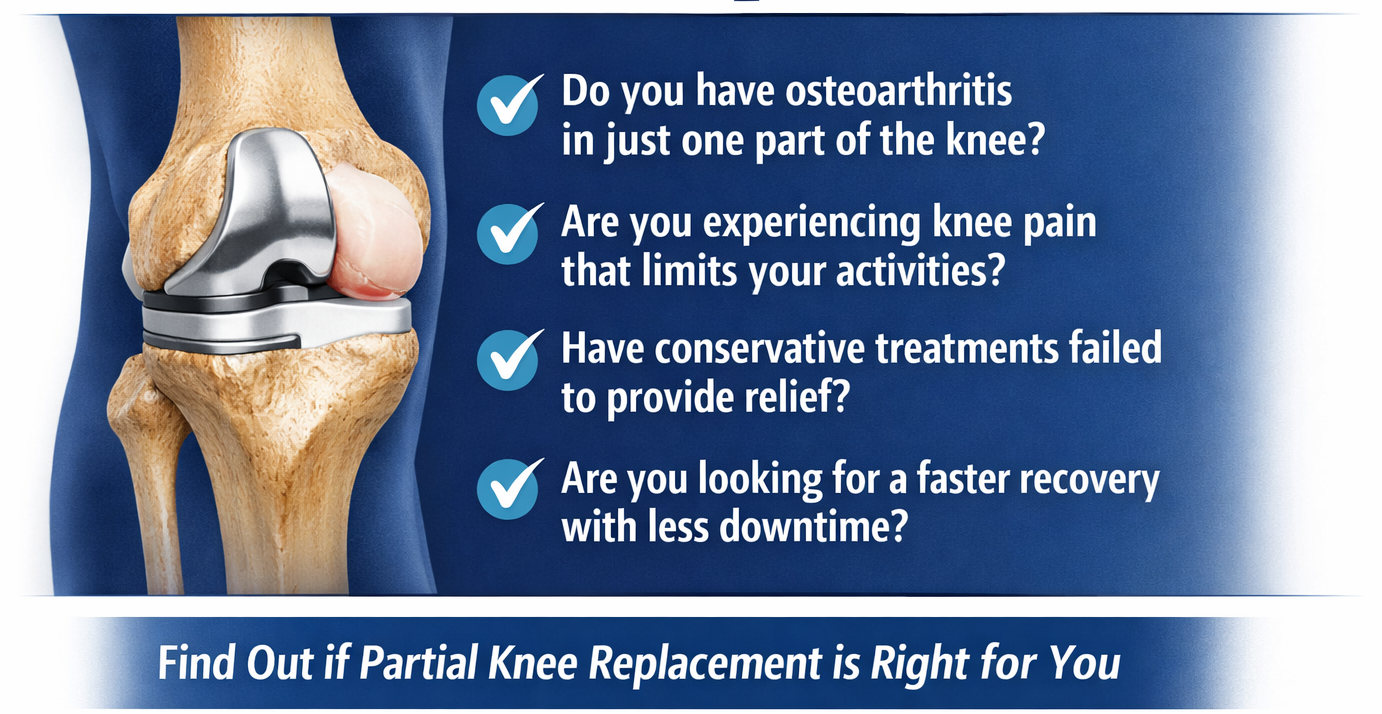
You may benefit from this surgery if you have:
- Arthritis limited to one part of the knee
- Intact ligaments (especially ACL)
- Good range of knee motion
- Persistent pain despite medications, injections, or physiotherapy
- Early to moderate osteoarthritis
- Younger or active individuals
- Patients seeking faster recovery and mobility
Why Choose Partial Knee Replacement?
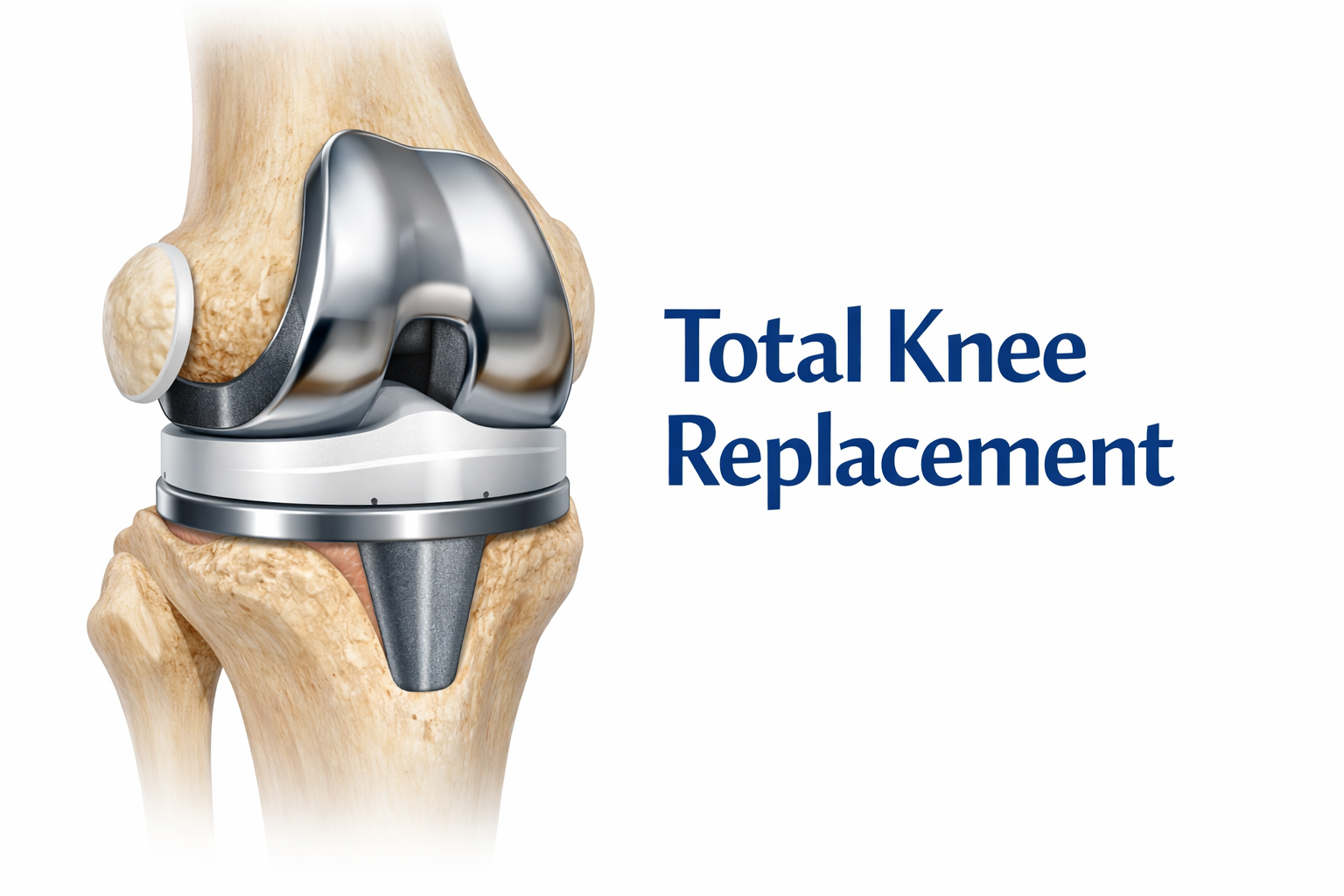
When is Total Knee Replacement a Better Option?
Partial knee replacement may not be suitable if:
- Arthritis affects multiple compartments
- Significant deformity (bow legs or knock knees)
- Ligament instability
- Inflammatory arthritis (e.g., rheumatoid arthritis)
The Procedure
What to Expect During Surgery
01:
Performed under spinal or general anesthesia
02:
Small incision (approximately 5–8 cm)
03:
Only damaged cartilage and bone are removed
04:
Artificial implant (metal + polyethylene) is placed
05:
Healthy ligaments and structures are preserved
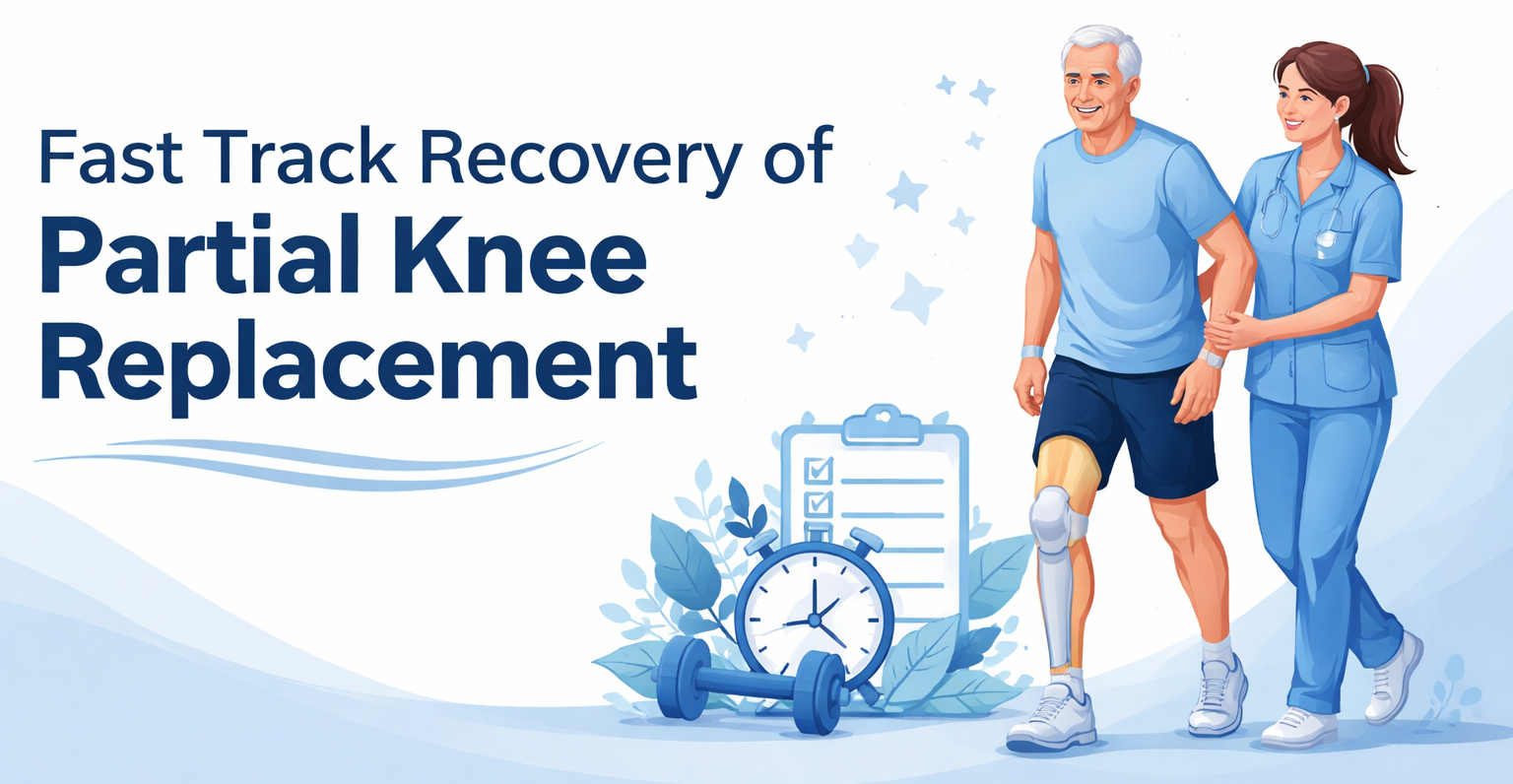
Fast Track Recovery
- Walking: Same day or next day
- Hospital stay: 1–2 days
- Return to daily activities: 2–4 weeks
- Full recovery: Around 6 weeks
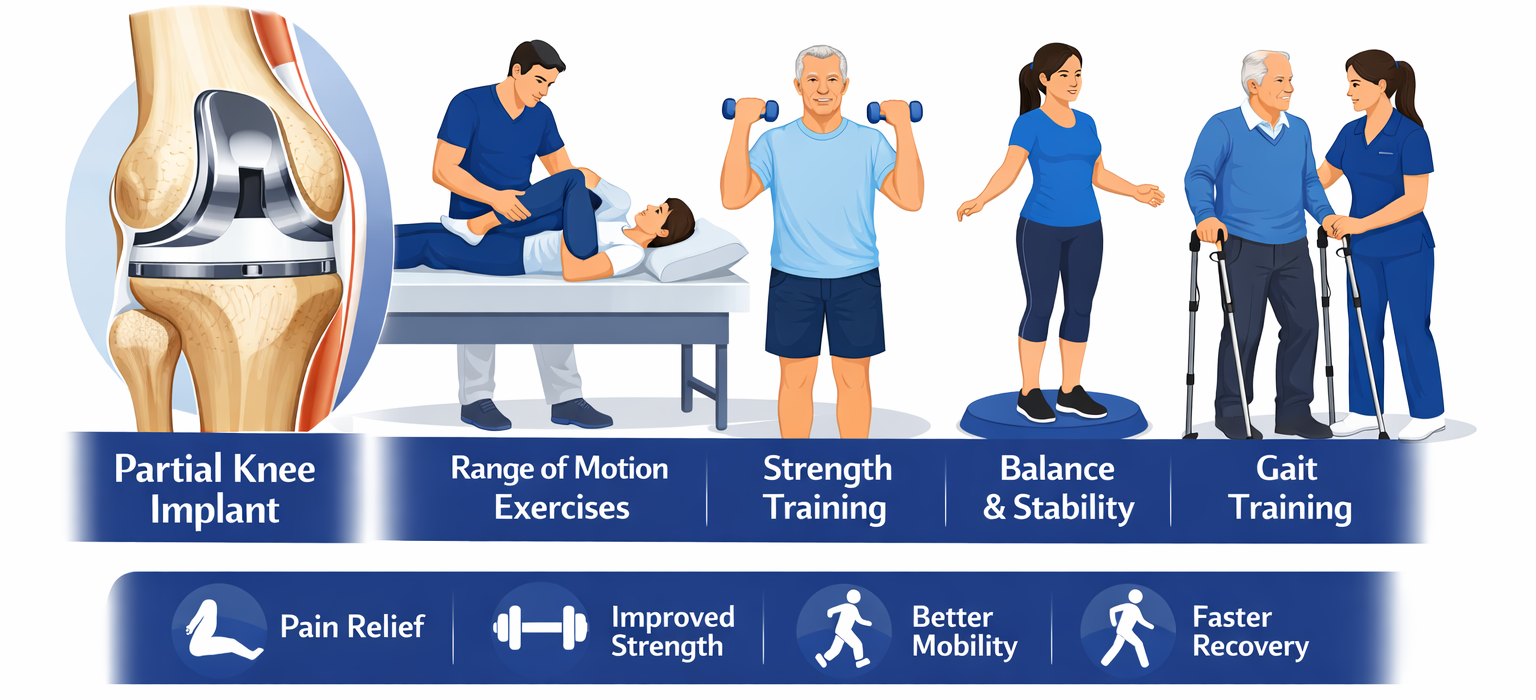
Physiotherapy Focus:
- Early mobilization
- Strength building
- Improving flexibility and movement
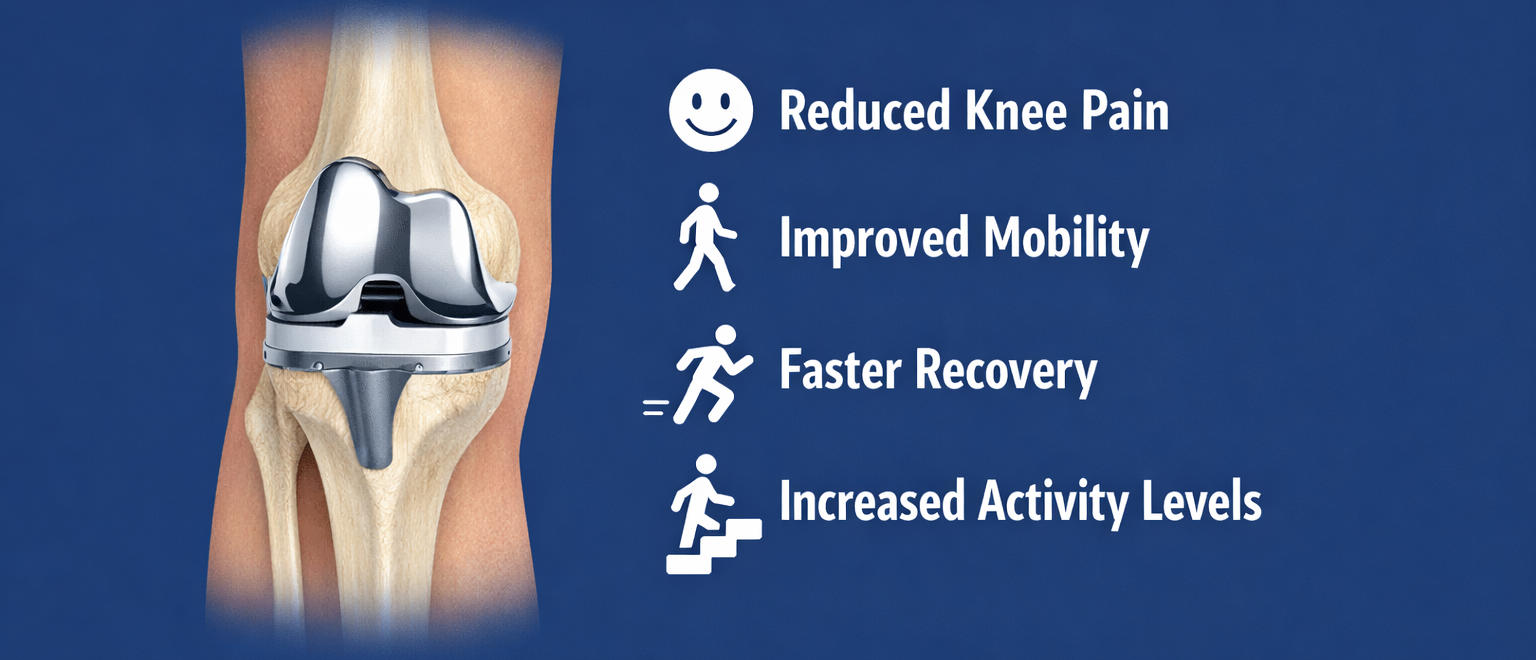
- Significant pain relief
- Improved mobility and function
- Knee feels more natural than total replacement
- High success rate in well-selected patients
Partial vs Total Knee Replacement
| Feature | Partial Knee Replacement | Total Knee Replacement |
|---|---|---|
| Area treated | One compartment | Entire knee |
| Incision | Smaller | Larger |
| Recovery | Faster (2–4 weeks) | Slower (6–12 weeks) |
| Knee feel | More natural | Slightly artificial |
| Bone preservation | More | Less |
| Hospital stay | 1–2 days | 3–5 days |
| Longevity | 10–15 years | 15–25 years |
Frequently Asked Questions
1. Is it better than total knee replacement?
2. How long does it last?
3. Can it be converted later?
Yes. If arthritis progresses, it can be safely converted to a total knee replacement.
4. Is it painful?
Pain is well managed with modern techniques. Most patients experience less pain than total knee replacement.
5. Will I walk normally?
Most patients start walking with support within a few days.
6. When can I return to sports?
7. What activities can I do?
You can return to:
- Walking
- Climbing stairs
- Driving
- Cycling and swimming
Avoid high-impact activities like running or jumping.
8. What are the risks?
- Infection
- Blood clots
- Implant loosening
- Arthritis progression in other compartments
(These are relatively uncommon.)
9. When can I return to work?
- Desk jobs: 2–3 weeks
- Active jobs: 4–6 weeks
Not sure if you’re a candidate?
Schedule a consultation today for a personalized evaluation and treatment plan.