
Frozen Shoulder (Adhesive Capsulitis)
Home > Treatments > Frozen Shoulder (Adhesive Capsulitis)
Frozen Shoulder
Dr. Balamurugan J is a senior orthopedic surgeon and Clinical Lead – Orthopedics at Kauvery Hospital, Radial Road, and Founder of Dr Bala’s Ortho Clinic. With over 15 years of experience, he specializes in joint replacement, arthroscopy, and complex trauma care. Trained in India and further specialized in the United Kingdom, he brings international standards of precision and patient-focused care to his practice.
A Gold Medalist in Orthopedics with several indexed publications, he is committed to evidence-based, ethical, and outcome-focused care, helping patients restore mobility, independence, and quality of life.
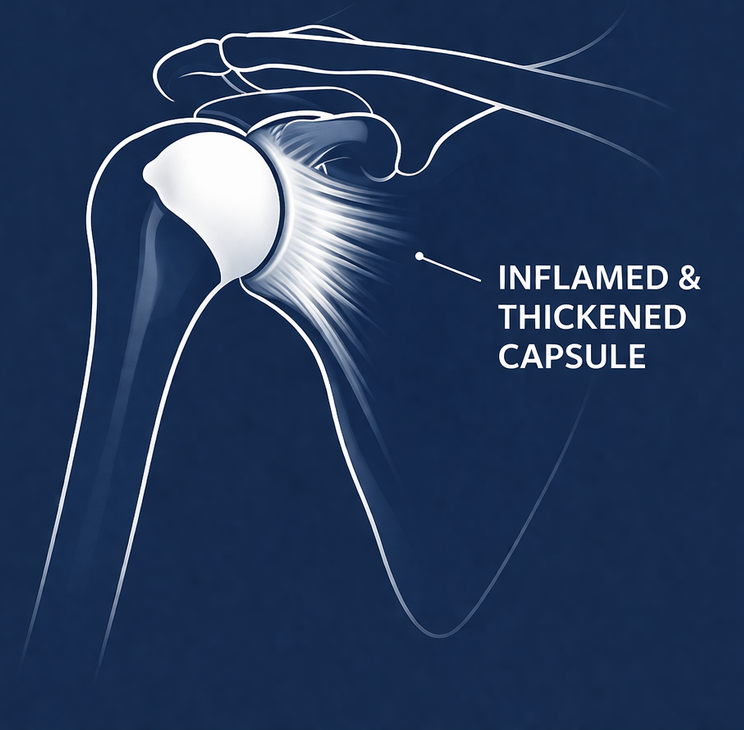
Frozen Shoulder
At Dr. Balamurugan’s Hip & Knee Clinic, we focus on:
- Relieving pain
- Restoring mobility
- Guiding you through a structured recovery

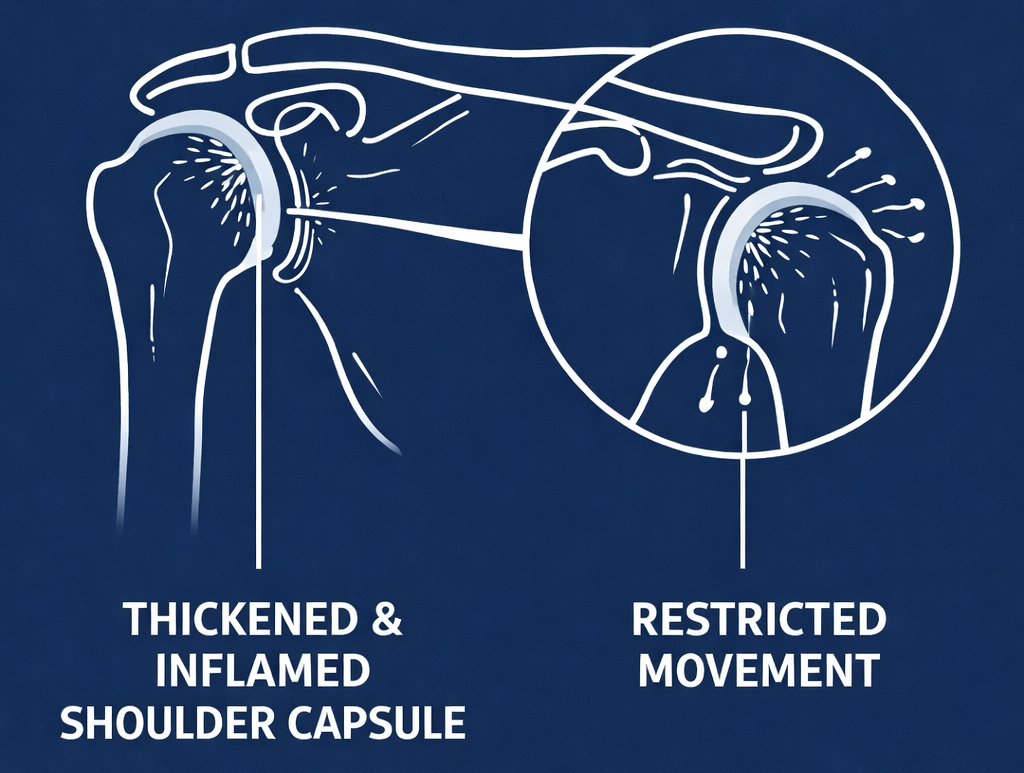
The capsule thickens
Movement becomes restricted

Even simple actions can cause pain

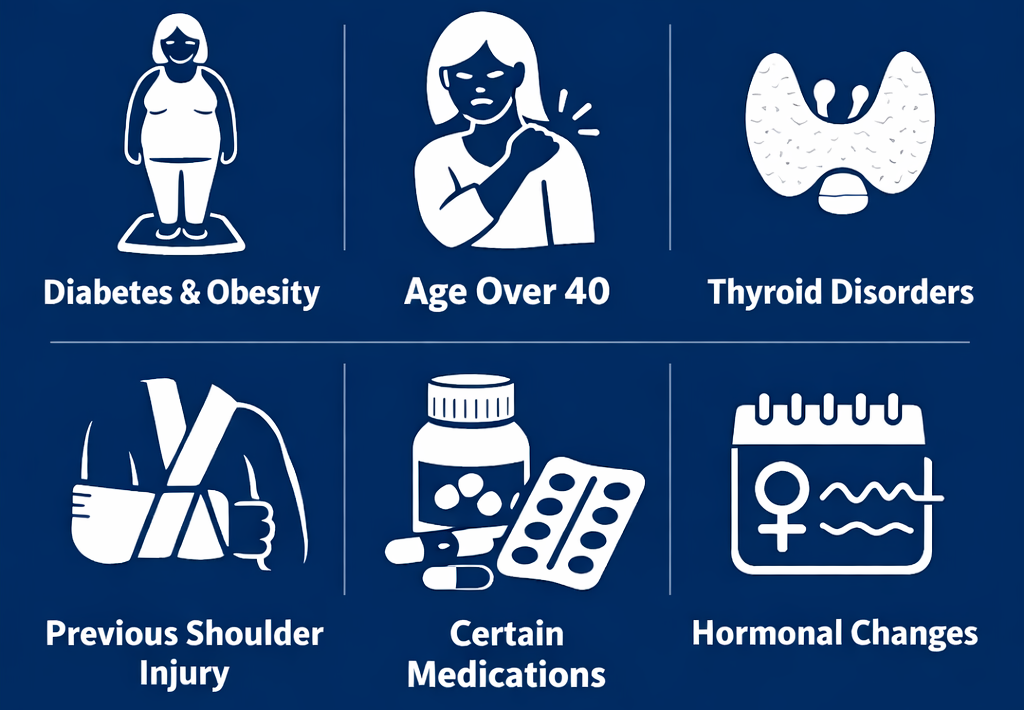
You may be more likely to develop frozen shoulder if you are:
- Between 40–60 years of age
- Living with diabetes
- Recovering from injury or surgery
- Experiencing prolonged shoulder immobility
- Affected by thyroid or metabolic disorders
Stages of Frozen Shoulder
01:
Freezing Stage
- Increasing pain
- Gradual loss of motion
02:
Frozen Stage
- Pain may reduce
- Stiffness becomes severe
03:
Thawing Stage
- Gradual return of movement
- Recovery phase begins
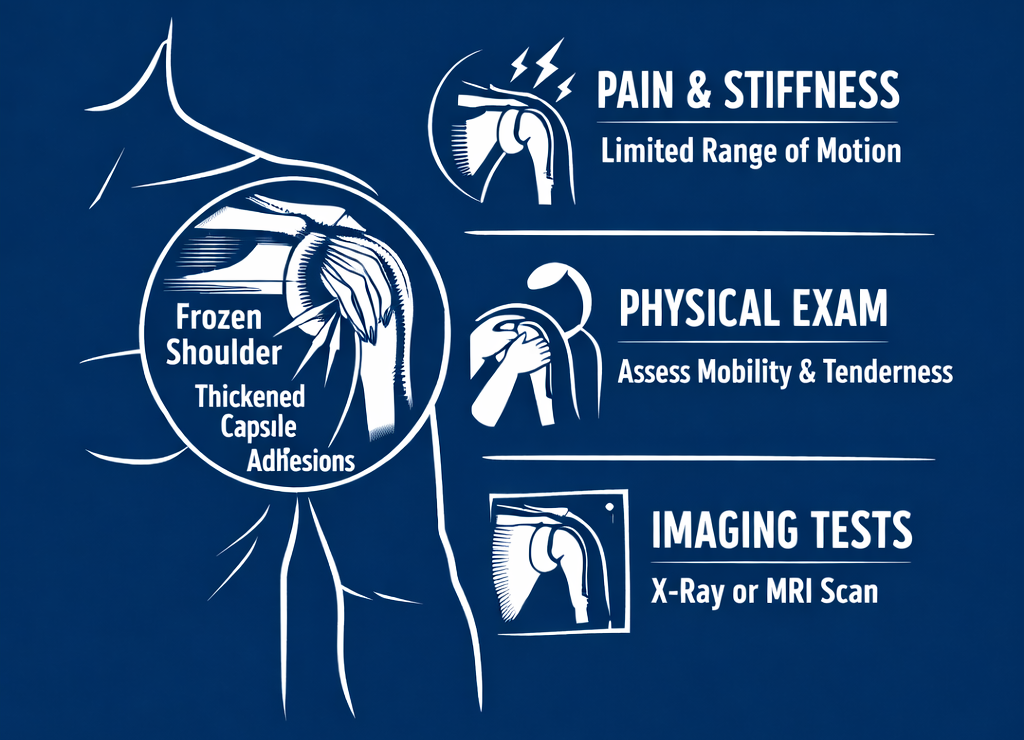
- Clinical Evaluation
Assessment of pain and movement restriction - Imaging Tests
- X-rays (to rule out arthritis)
- MRI (if needed to exclude other conditions)
Most patients improve without surgery through:
- Pain relief medications
- Physiotherapy (essential)
- Stretching and mobility exercises
- Heat therapy
- Activity modification
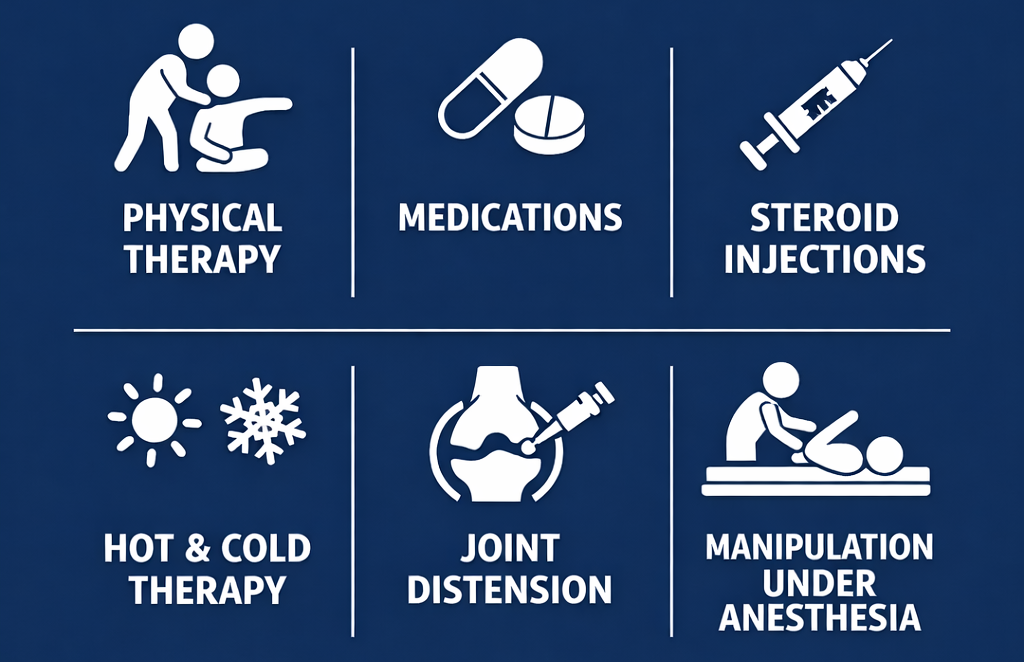
Injection Therapy
- Corticosteroid injections reduce inflammation
- Most helpful in early painful stages
Hydrodilatation (Selected Cases)
- Fluid injection to stretch the joint capsule
- Helps improve movement
Surgical Treatment (Rare)
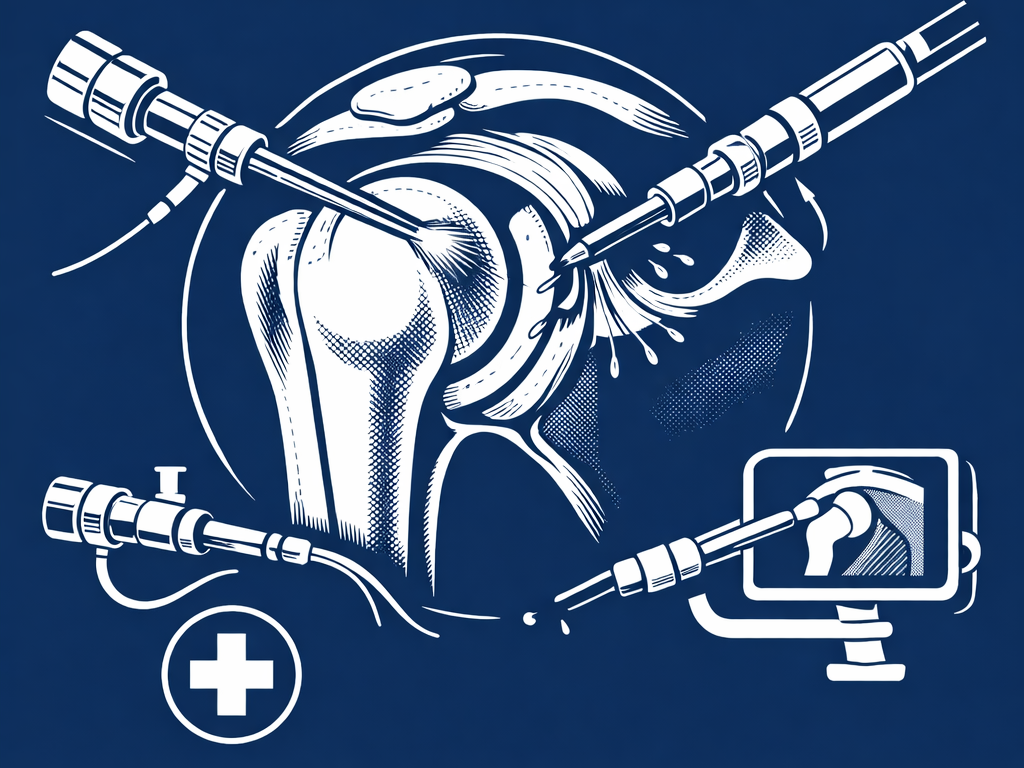
If stiffness persists:
- Arthroscopic Capsular Release
- Minimally invasive (keyhole surgery)
- Tight capsule is released
- Followed by intensive physiotherapy
- Arthroscopic Capsular Release
Our Approach
We focus on a structured, patient-centered recovery:
- Early Diagnosis – Improves outcomes
- Pain Control First – Enables better therapy participation
- Structured Rehabilitation
- Restore movement
- Improve flexibility
- Gradually build strength
- Patient Education – Helps ensure treatment consistency
Recovery
Frozen shoulder improves gradually with time and treatment.
Key Points:
- Recovery may take several months
- Regular physiotherapy is crucial
- Consistency matters more than intensity
Delaying treatment can lead to:
- Prolonged stiffness
- Severe restriction of movement
- Longer recovery time
Frequently Asked Questions
1. Is frozen shoulder permanent?
No. Most patients recover with proper treatment.
2. How long does it last?
Typically 6 to 18 months, depending on stage and treatment.
3. Is physiotherapy necessary?
Yes. It is the most important part of treatment.
4. Is it related to diabetes?
Yes. It is more common and often more severe in diabetic patients.
5. Can I continue using my arm?
Yes. Gentle movement is encouraged. Avoid complete rest.
6. Are injections safe?
Yes, when used appropriately under medical supervision.
7. When is surgery needed?
Only in rare cases when conservative treatment fails.
8. Can it come back?
Recurrence is uncommon but possible in high-risk individuals.
If shoulder pain or stiffness is affecting your daily life, early treatment can speed up recovery.
Consult Dr. Balamurugan for expert ACL care and advanced treatment options.