
Rotator Cuff Tear
Home > Treatments > Rotator Cuff Tear
Rotator Cuff Tear
Causes & Treatment
Dr. Balamurugan J is a senior orthopedic surgeon and Clinical Lead – Orthopedics at Kauvery Hospital, Radial Road, and Founder of Dr Bala’s Ortho Clinic. With over 15 years of experience, he specializes in joint replacement, arthroscopy, and complex trauma care. Trained in India and further specialized in the United Kingdom, he brings international standards of precision and patient-focused care to his practice.
A Gold Medalist in Orthopedics with several indexed publications, he is committed to evidence-based, ethical, and outcome-focused care, helping patients restore mobility, independence, and quality of life.
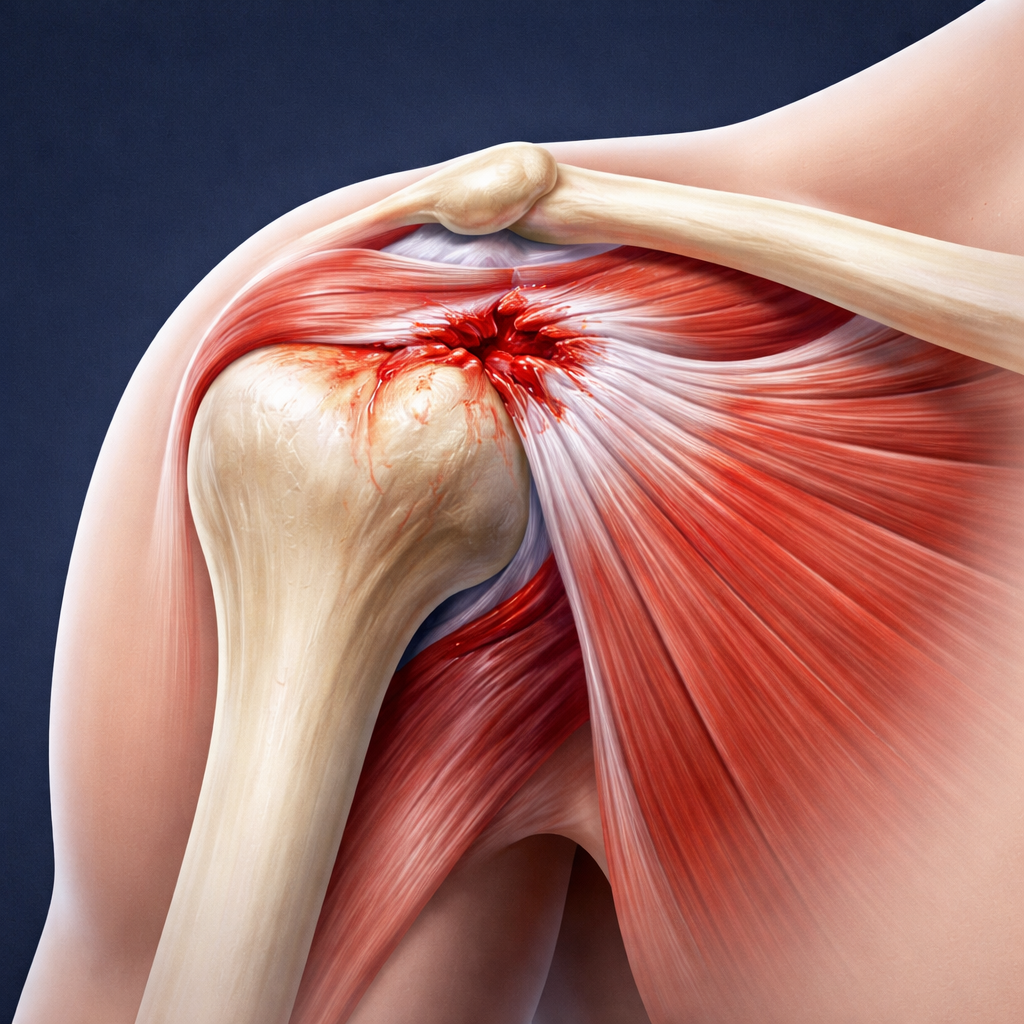
Rotator Cuff Tear
Shoulder pain when lifting your arm? It could be a rotator cuff injury.
Rotator cuff injuries are one of the most common causes of shoulder pain—especially in individuals over 40 or those involved in repetitive overhead activities.
Early diagnosis and timely treatment can significantly improve outcomes by restoring strength, reducing pain, and preventing further damage.
At Dr. Balamurugan’s Hip & Knee Clinic, we offer complete care—from conservative treatment to advanced minimally invasive (arthroscopic) repair.
What is the Rotator Cuff?
The rotator cuff is a group of four muscles and tendons that surround and stabilize the shoulder joint. It plays a key role in:
Functions of the Meniscus
Lifting the arm

Stabilizing the shoulder

Enabling smooth, controlled movements

When one or more of these tendons become damaged or torn, it leads to pain, weakness, and restricted movement.
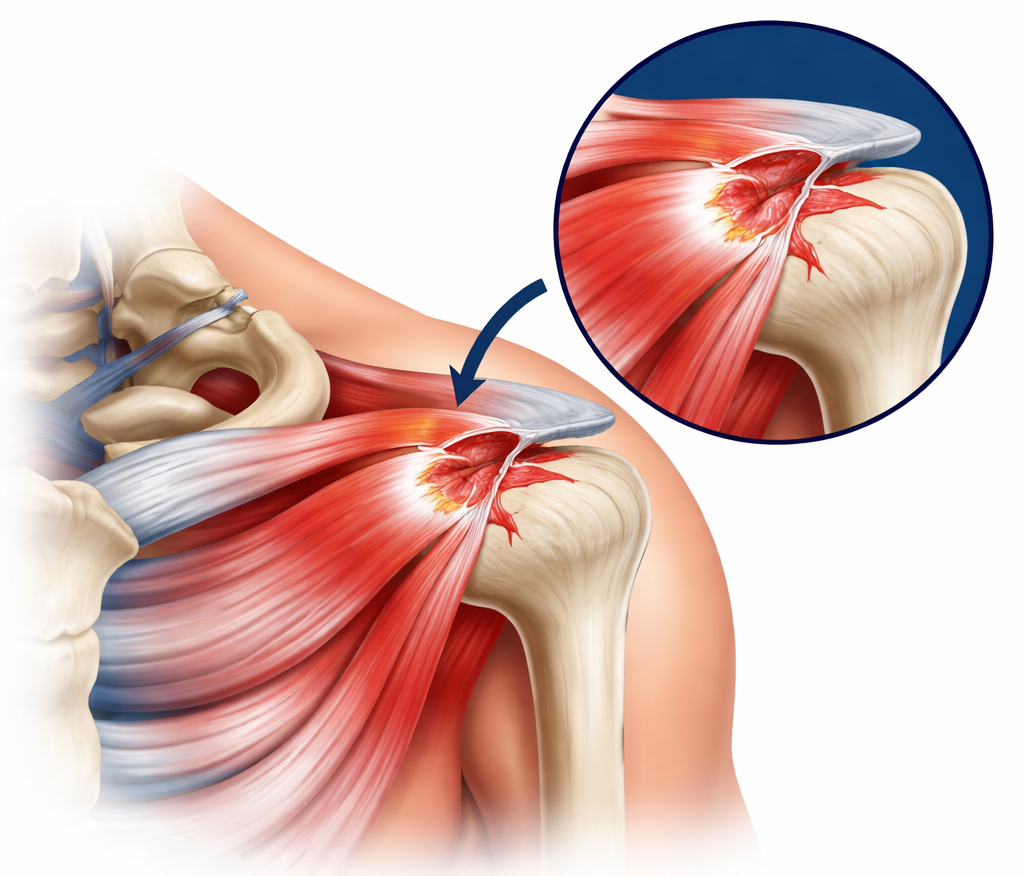
Causes of Rotator Cuff Tear
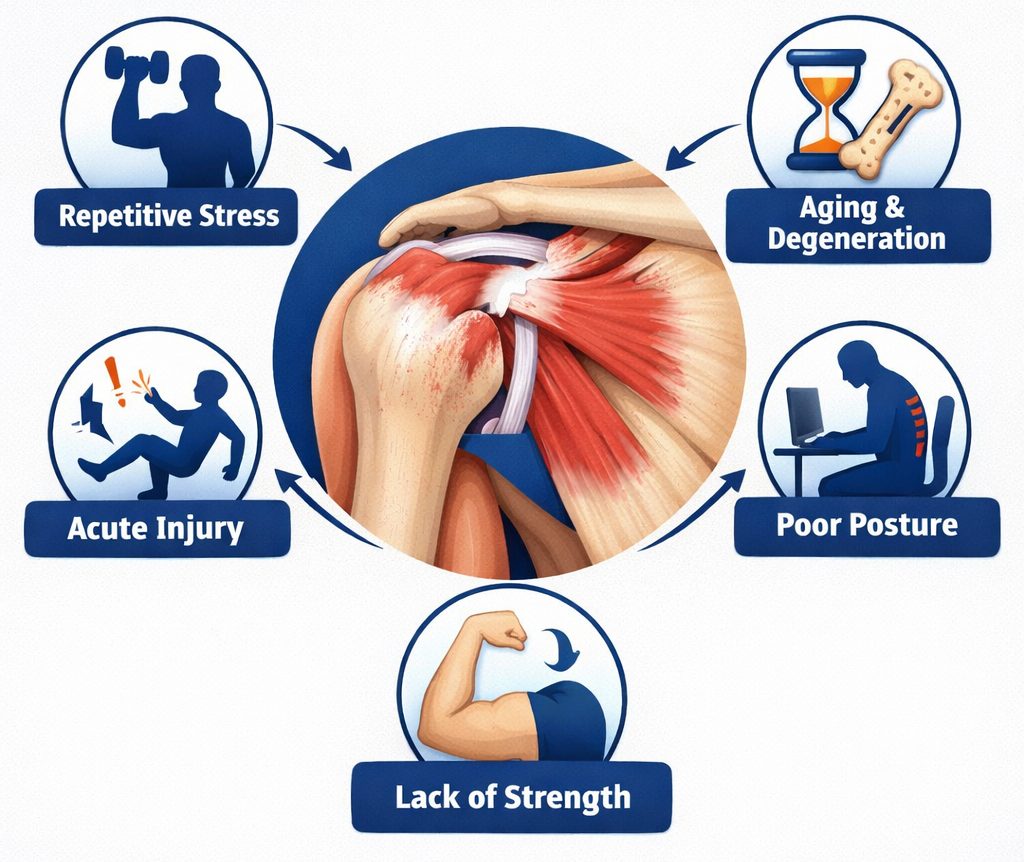
Degenerative (Most Common)
- Age-related wear and tear
- Repetitive overhead movements
- Reduced blood supply to tendons
- Fall on the shoulder
- Sudden lifting injury
- Sports-related accidents
Symptoms to Watch For:
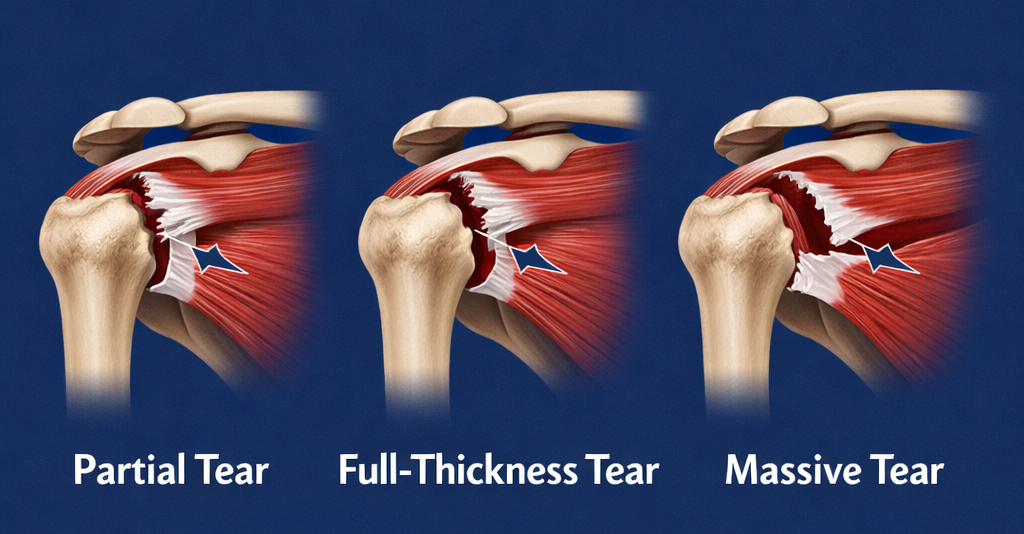
Types of Rotator Cuff Tears
- Partial Tear – Tendon is damaged but not completely torn
- Full-Thickness Tear – Tendon is completely torn
- Massive Tear – Large or multiple tendons involved
- Assessment of pain, movement, and strength
- X-ray – Evaluates bone and joint condition
- MRI Scan – Confirms tear size and tendon damage
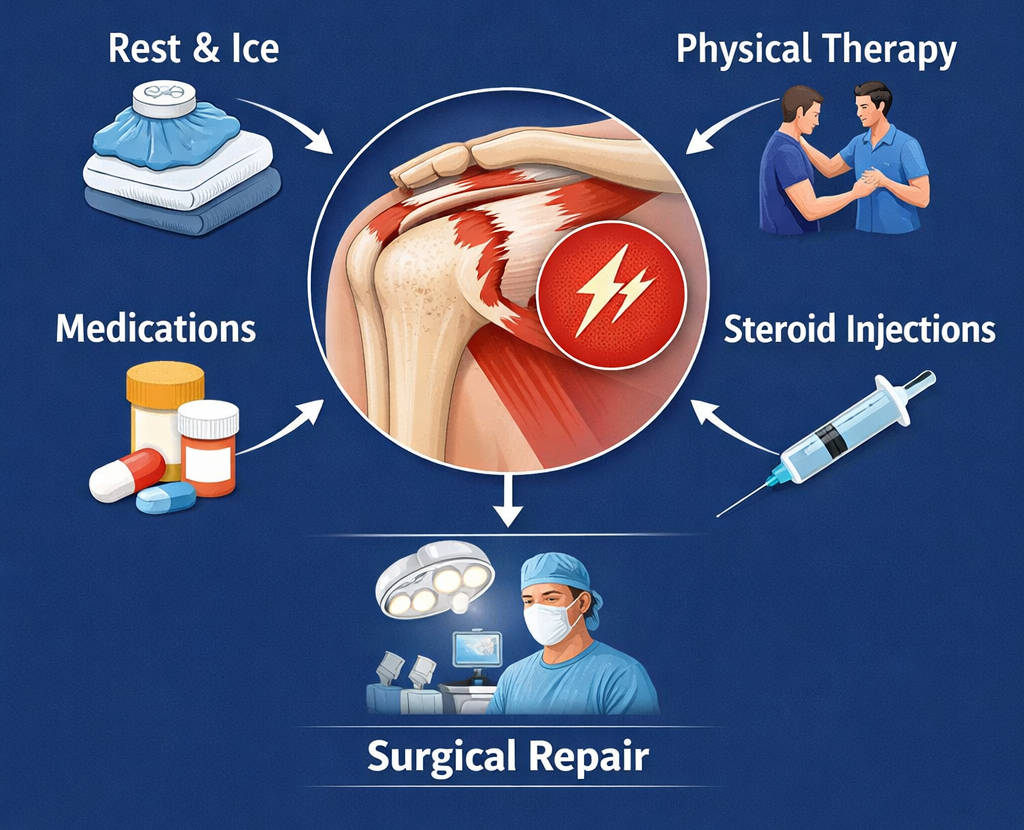
Treatment is tailored based on:
- Size of the tear
- Duration of symptoms
- Age and activity level
- Functional needs
Non-Surgical Treatment
Many patients improve without surgery through:
- Rest and activity modification
- Pain relief medications
- Physiotherapy
- Strengthening and mobility exercises
- Injection therapy (in selected cases)
- Partial tears
- Degenerative tears
- Low-demand individuals
Arthroscopic Rotator Cuff Repair
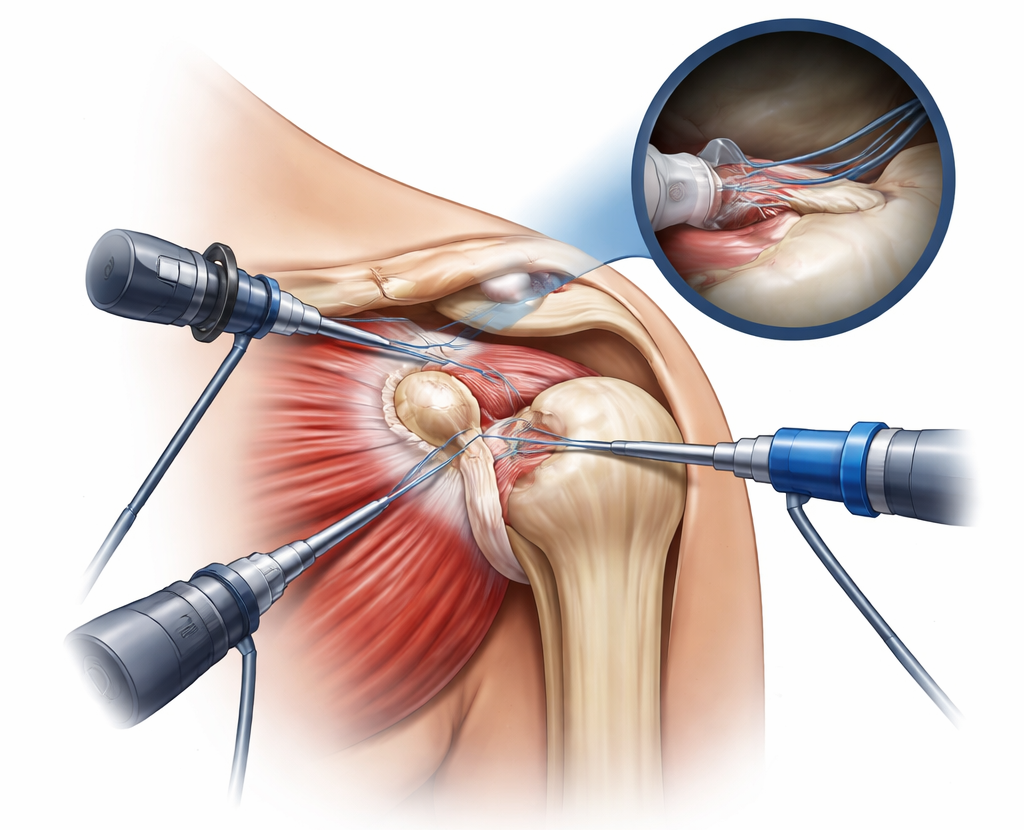
Recommended for:
- Full-thickness tears
- Persistent pain despite treatment
- Weakness affecting daily activities
- Active individuals
- Performed using minimally invasive (keyhole) techniques
- Torn tendon is reattached to bone using anchors
- Less tissue damage and faster recovery
Our Approach
Step-by-step recovery plan to restore:
- Movement
- Strength
- Function
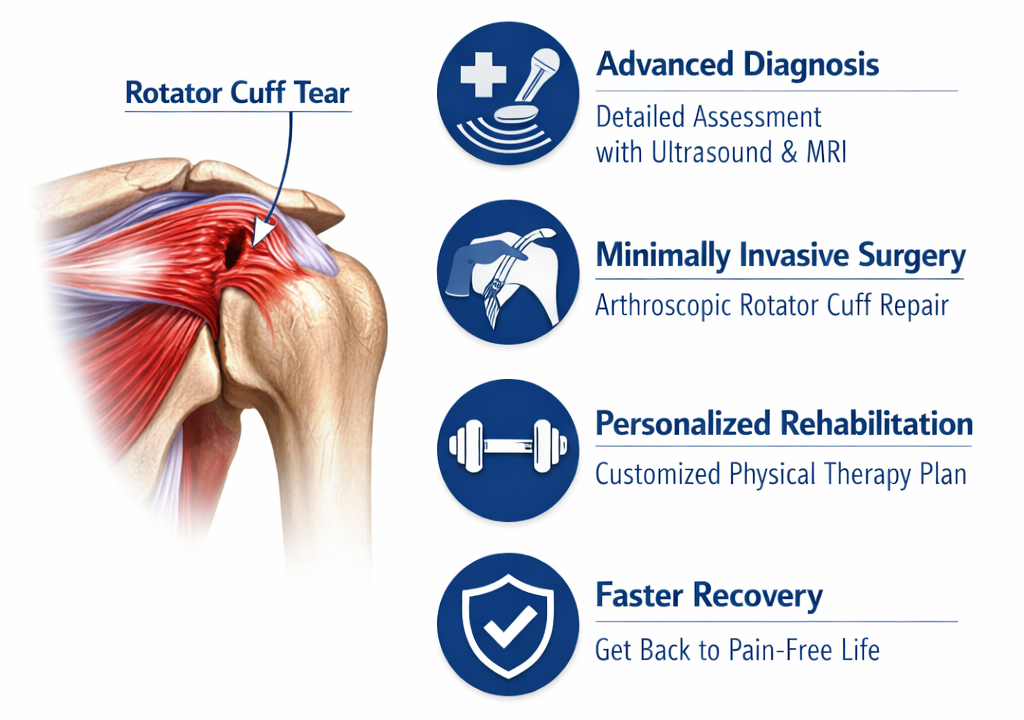
Recovery
After Surgery
Phase 1:
Initial (0–4 Weeks)
Step-by-step recovery plan to restore:
- Movement
- Strength
- Function
Phase 2:
Intermediate (4–12 Weeks)
- Gradual increase in mobility
- Begin strengthening exercises
Phase 3:
Advanced (3–6 Months)
- Functional recovery
- Return to daily activities
Full recovery: Typically 4–6 months (may vary depending on severity)
Delaying care can lead to:
- Increase in tear size
- Muscle weakness
- Irreparable damage
- Reduced surgical success
- Relief from pain
- Improved shoulder strength
- Better range of motion
- Return to normal activities
- Prevention of further damage
Frequently Asked Questions
1. Can a rotator cuff tear heal on its own?
2. Is surgery always necessary?
3. Is the surgery painful?
Pain is well managed with modern anesthesia and medications.
4. How long does surgery take?
5. Will I need a sling?
6. When can I use my arm normally?
- Light activities: within a few weeks
- Full recovery: 4–6 months or more
7. Can I return to sports?
Yes, after proper rehabilitation.
8. What happens if I ignore the problem?
The tear may worsen, leading to permanent weakness and reduced shoulder function.
If you’re experiencing persistent shoulder pain or difficulty lifting your arm, don’t delay evaluation.
Consult Dr. Balamurugan for expert diagnosis and personalized rotator cuff treatment.